Published: Dec 9, 2018 by Lucy Tennyson
Forward bends and down dog are both Inversions, as are stronger poses such as shoulder stand, or legs up the wall, when the legs are held higher than the heart.
The benefits are said to come from the affect on venous return – the way de-oxygenated blood drains back through the veins to the heart. This flow is made stronger when we go upside down, while the head and brain also get a boost in blood supply.
Inversions also work on the lymphatic system, the flow of white blood cells which remove toxins, excess proteins and bacteria, carrying them to the lymph nodes to be eliminated.
Stronger inversions like shoulder stand also strengthen the arms, legs, back and core abdominal muscles.
However, there is always a risk of neck injury in poses such as shoulder stand, when the weight of the body is taken into the head and shoulders. It’s not recommended for anyone with eye issues or a neck problem.
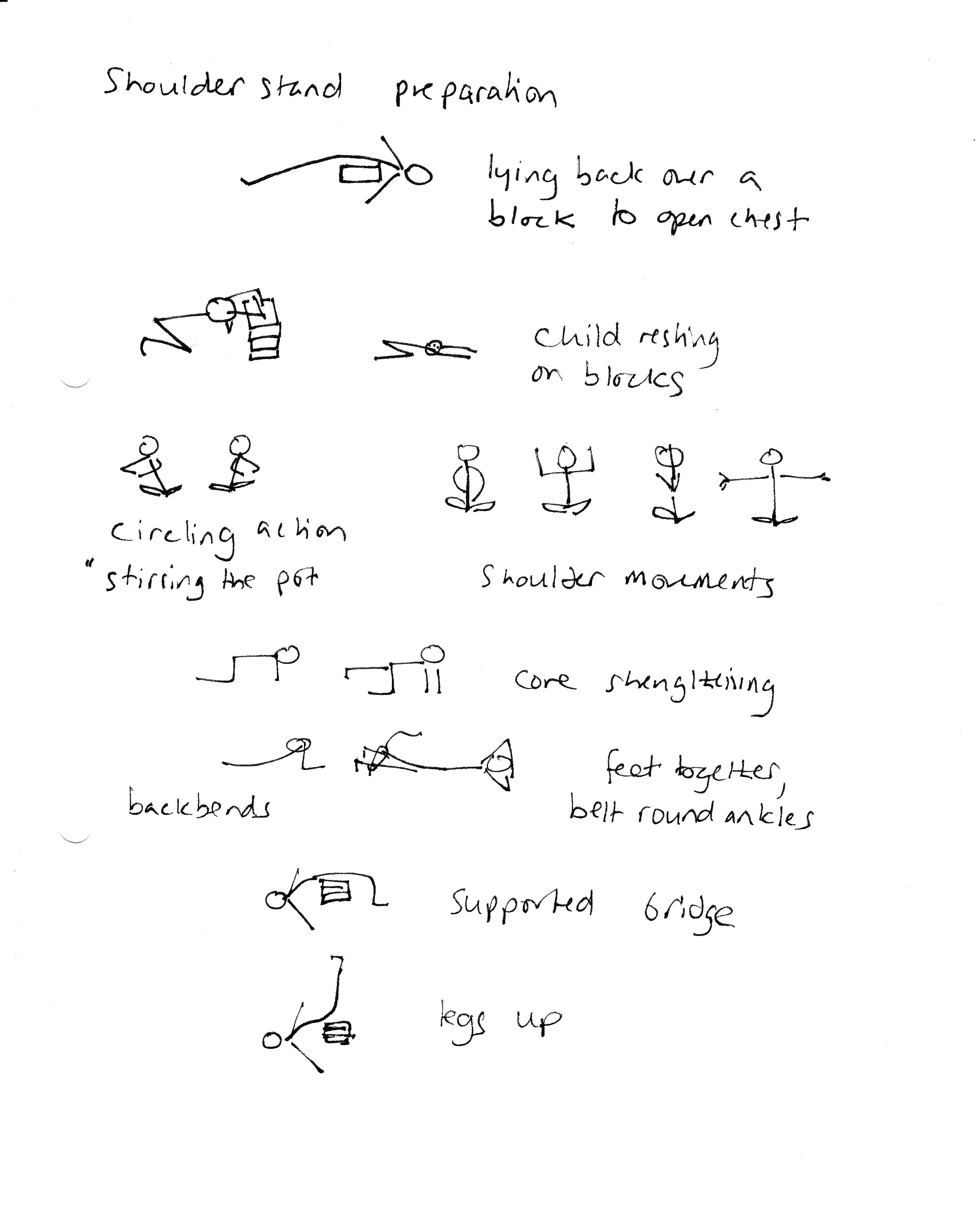
I like to make sure we prepare thoroughly. This week we worked on some preparatory poses, aimed at opening the shoulders to ensure the weight is evenly distributed on the shoulders and upper arms and not on the head and neck.
We opened our chests lying back on over a yoga block. We did some warm ups and strength work for the shoulders, and then practised coming up onto the shoulders and arms in bridge.